90 YEARS SINCE THE BIRTH OF JOVAN PETROV
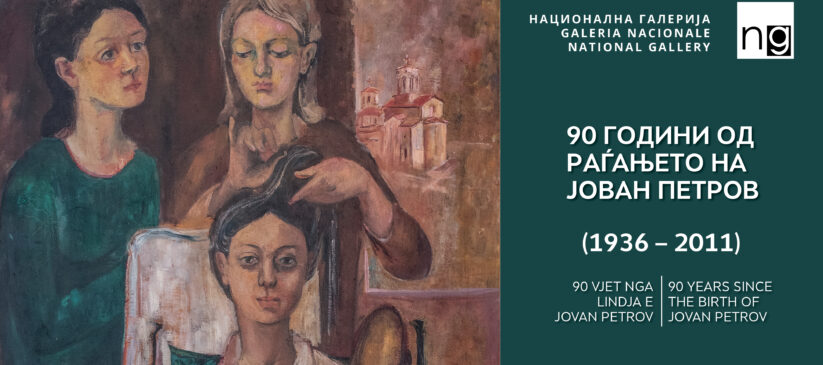
We would like to inform you that the anniversary exhibition entitled “90 Years since the Birth of Jovan Petrov” dedicated to the work of the Macedonian artist and conservator will be available to the public from 12.8.2026 in the Cifte Amam facility. The ceremonial opening and promotion of the printed anniversary-monographic edition will be on 20.8.2026 at 8 pm in the same space. The exhibition is part of the program activities of the National Gallery for 2026, supported by the Ministry of Culture and Tourism of the RN Macedonia.
Jovan Petrov (village of Begniste, Tikvesh region, 1936 – Skopje, 2011) is a Macedonian painter, conservator and restorer, an author whose diverse work and exceptional conservation activity left a lasting mark in the history of Macedonian art. He completed his secondary education at the School of Applied Arts in Skopje where he studied with prominent Macedonian artists and educators Dimitar Pandilov, Ljubomir Belogaski, Ljubodrag Marinković-Penkin, and Dimo Todorovski, who played a significant role in his professional formation. In the 1961/1962 academic year, he graduated from the Academy of Fine Arts in Ljubljana, studying under professors Slavko Pengov, Gojmir Anton Kos, Božidar Jakac, and Riko Debenjak. In 1964, he enrolled in postgraduate studies in the Conservation Department at the Academy of Fine Arts in Ljubljana, specializing in the conservation and restoration of works of art executed in various painting techniques, as well as the scientific examination of materials and the technology of their production. That same year, he stayed in Paris as a conservator for the exhibition “Art on the Soil of Yugoslavia.” In 1965 he became a member of the Association of Fine Artists of Slovenia, exhibiting with them in Ljubljana, Graz, and Milan. In the same year, he was employed at the Republic Institute for the Protection of Cultural Monuments in Skopje, where he built a rich professional career as a conservator and restorer. In 1976, he completed his residency at the conservation-restoration laboratories in East Berlin and the Academy of Fine Arts in Dresden, where he became acquainted with the latest scientific methods in the field of cultural heritage protection. The following year, he was awarded a Silver Plaque for his exceptional contribution to the conservation and restoration of cultural heritage in Macedonia. During 1977–1978, as a scholarship holder of the Ministry of Cultural and Environmental Heritage of Italy, he stayed in Rome, refining his skills in the laboratories of the Central Institute for Restoration (Istituto Centrale del Restauro), one of the world’s leading institutions in conservation and restoration. In 1978, the documentary film “Conservation of a Thousand-Year-Old Painting”, dedicated to his conservation work, was awarded a Gold Medal with a Charter at the Festival of Scientific and Documentary Film in Belgrade.
Throughout his career, he worked on the conservation and restoration of numerous icons, easel paintings and frescoes, including those in the Church of St. Panteleimon in Nerezi, the Church of the Holy Mother of God Peribleptos in Ohrid, as well as numerous other cultural monuments of exceptional significance. Since 1969 he has been a member of the Association of Fine Artists of Macedonia (DLUM). He authored numerous professional papers dedicated to Macedonian fresco painting and conservation practice, including “Unknown Fresco Painting” (1971), “Research Work on the Paintings in the Church of St. Petka in the Village of Brajčino” (1975), “Research and Conservation Work in the Church of the Ascension – St. Spas in Štip” (1975), “Portrait of Dragica – Author Dimitar Andonov (Conservation of the Work)” (1977), and the text “Old Church and Fresco Painting in the St. Joakim Osogovski Monastery,” published in the newspaper Nova Makedonija. In 1980, Filmske Novosti from Belgrade filmed a documentary segment on his conservation work at the St. Joakim Osogovski Monastery, which was shown in Yugoslav cinemas. That same year, he was awarded the Order of Labor with a Silver Wreath by the President of SFR Yugoslavia for exceptional merit in conservation. The painting of the Archiepiscopal Cathedral Church of St. Kliment Ohridski in Skopje holds a significant place in his oeuvre.
In parallel with his conservation work, Petrov was also intensively involved in painting. With his diverse creativity and exceptional conservation activity, he left a lasting mark in the history of Macedonian art. His work represents a significant synthesis of painterly creativity, scientific research work and the protection of cultural heritage, which is why he is today counted among the most significant Macedonian artists and conservators of the second half of the 20th and the beginning of the 21st century.
The vision of Jovan Petrov’s art connects the past with the present moment of creation, as well as the peeling of layers of patina from the icons and frescoes he worked on. Disciplined by nature and imbued with a professional sense of responsibility toward his craft, the conservator Jovan Petrov brought many saints back to life in our churches and monasteries. Furthermore, as a leading expert in protection institutes, he was entrusted by the founders of Macedonian modern art with direct preservation of canvases and drawings. He successfully restored damaged and deteriorating, highly significant paintings (a large portion of portraits and landscapes, today part of the National Gallery’s prominent collection) by Macedonian artists such as Gjorgji Zografski, Dimitar Andonov Papradishki, Nikola Martinoski, and other notable painters in the collection.
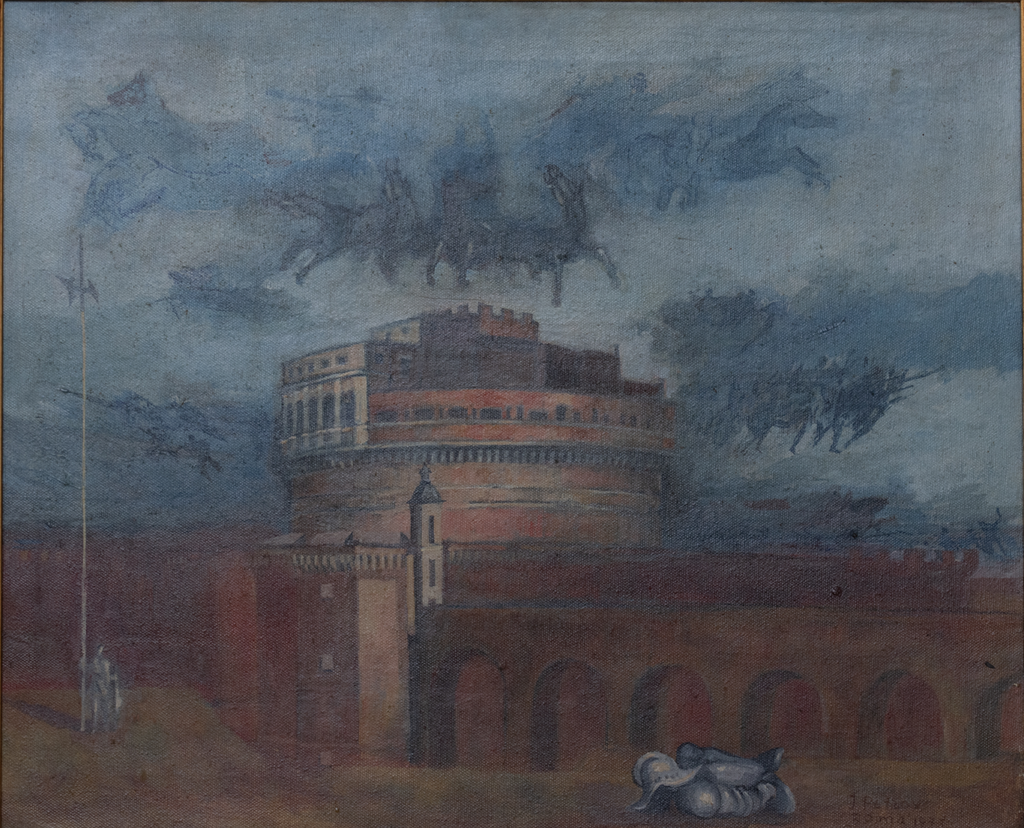
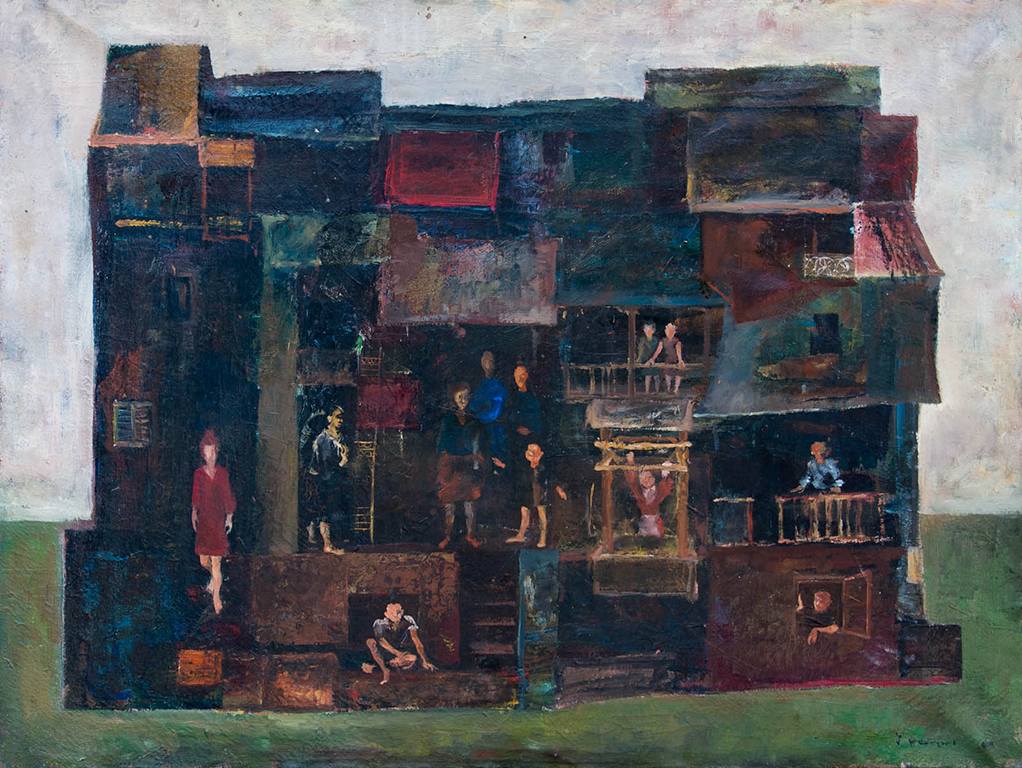
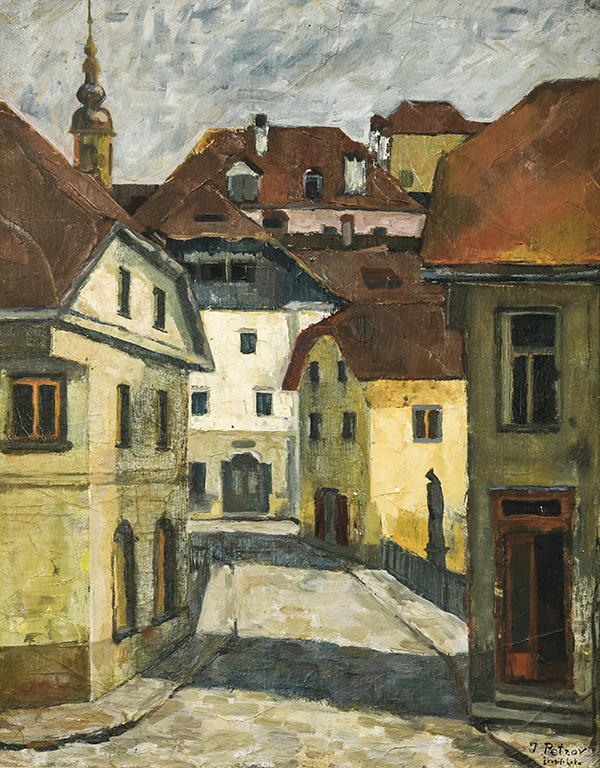
The creative work of the painter Jovan Petrov represents an extensive and compelling artistic expression within Macedonian contemporary fine art as a whole, the valuation of which deserves special attention. He belongs to that category of visual artists for whom art represents a humane mission aimed at enriching the human spirit. Petrov is simultaneously a painter and a researcher-scientist who, through canvas and color, strives to penetrate the “essence of things,” owing to which his creative energy across all these segments evokes admiration and emotion. Several key factors shape the unique painting style of Jovan Petrov, creating a fusion between the rigorous Slovenian academic tradition and his profound dedication to the conservation of medieval Macedonian Byzantine art.
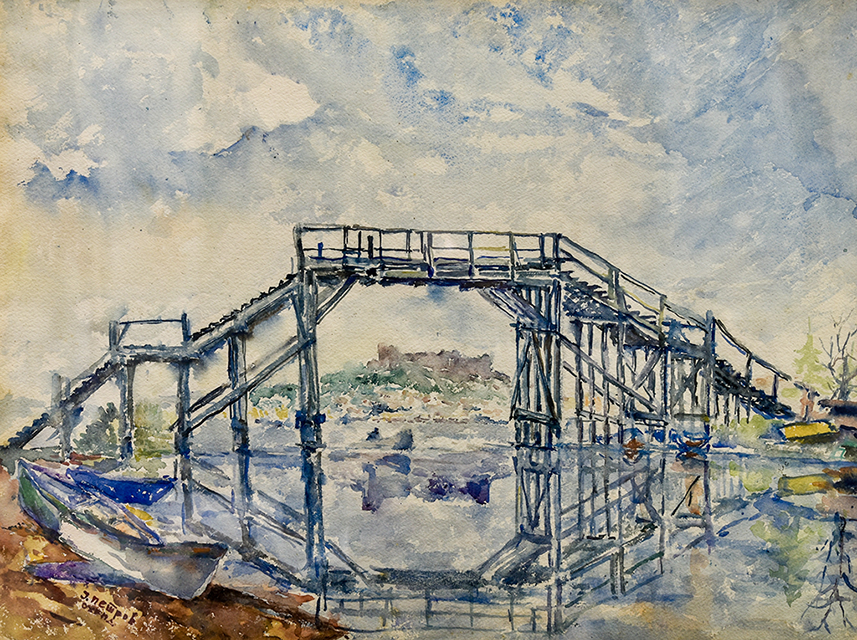
The place Jovan Petrov holds in Macedonian art history stems precisely from his multifaceted interest in art and conservation—an art that authentically comes from the foundations of cultural heritage, itself becoming a part of it. Jovan Petrov’s work features profound emotional connotations that reflect the inner artistic philosophy and cultural memory of his native region, utilizing his conservation practice to construct a personal philosophy of painting with deep ethical and aesthetic roots in his homeland.
Senior Curator: Maja Čankulovska-Mihajlovska
Many thanks to the family of Jovan Petrov for making it possible for us to exhibit his works. The collection belongs to the Petrov family. The exhibition is curated by Maja Čankulovska-Mihajlovska, Senior Curator, while collaborators are Maja Nedelkoska Brzanova, Curator-Advisor; Vladimir Tanevski, MA, Curator; Emil Nikolovski and Antonio Pirkovski, conservators.
The exhibition will be opened by the Director of the National Gallery, Dr. Ali Sinani, an address will be delivered by the Program Manager and Senior Curator, Maja Krstevska.
The exhibition will remain open until the end of August.